

Virtual Accounting FirmsBooks, payday setup, and the return
We keep the books, set payroll up, and prepare the return, and Steven Palmieri, a Tax CFO and the Entrepreneur's CFO, is the person on the call.


Which month is open.

You will be talking to the Steven Palmieri practice.

Where your books live.
In books you pay for and can close to us, under your name.
Click to see the books ›Tap to see the books ›
Who answers the call.
A named person is on the call. If that person misses a month, someone else here already knows the close weekday.
Click to see the call ›Tap to see the call ›
One weekday for the close.
We name the weekday. Deposits get their names before it.
Click to see the close ›Tap to see the close ›
What we will not sign.
The company that already runs payday keeps the button, the filings, and the money. A signed cover on a statement is work we hand outward.
Click to see the limit ›Tap to see the limit ›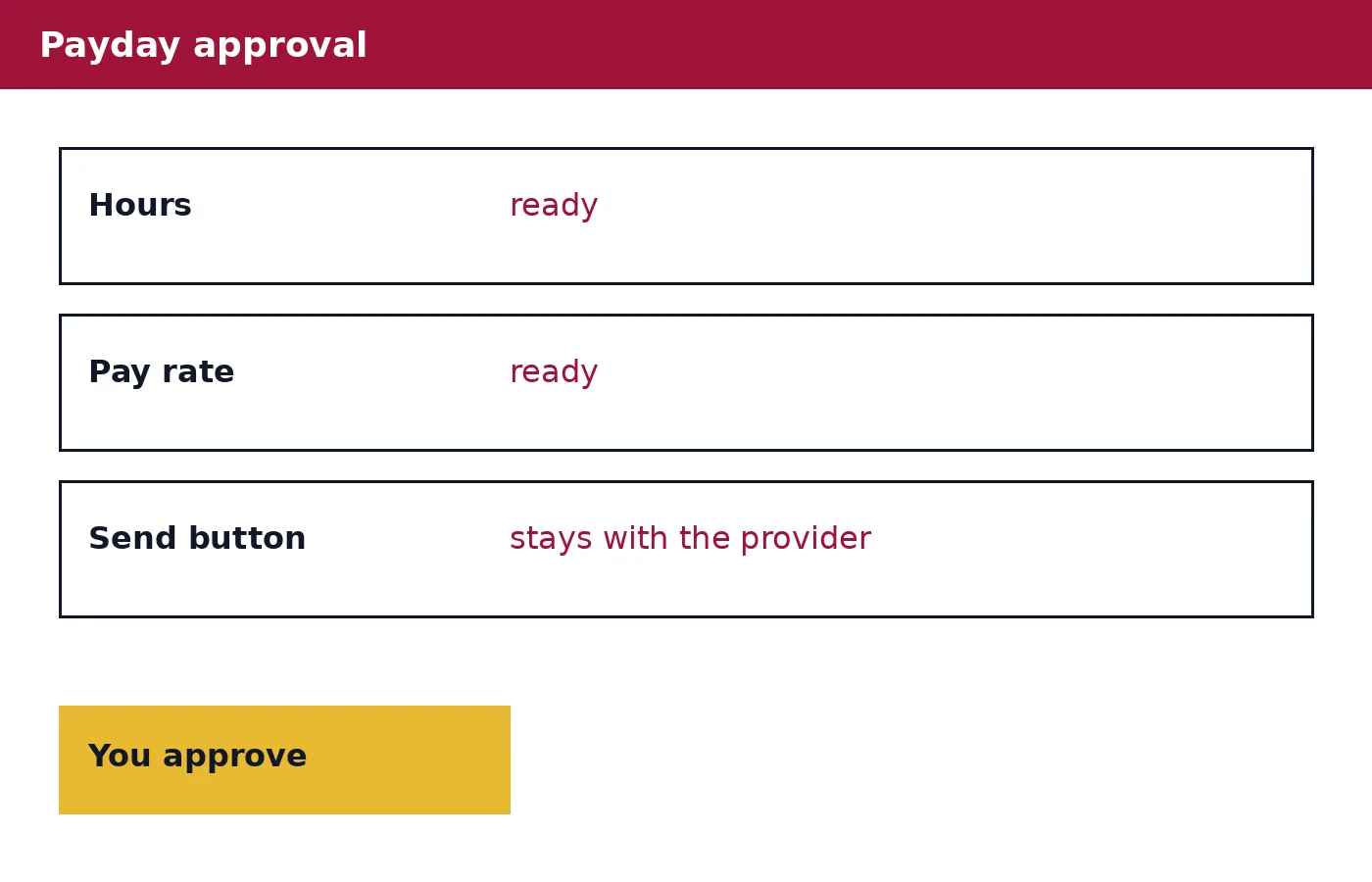
What you still do.
You approve payday and you decide. We keep the books.
Click to see your part ›Tap to see your part ›
While the year can still change.
A hard week can wipe out an afternoon of jobs. The close weekday we already named does not move when the week does.
Click to see open months ›Tap to see open months ›The software plan test
A software company can sell you the ledger and a bookkeeping add on in one price. That product has a place. It is often how a new shop gets the bank feed connected and the categories started. We are not here to rank those products or to name a winner.
The only test we put on that product is a weekday said out loud. Can a person tell you which weekday the month closes. If the answer is that the books are always in progress, you have software. You do not yet have a close.
Read the plan as a category. Included hours, a chat window, and a row of menus are features. A finished month is a date plus statements you can hand to someone.

Six questions, then you know
Open the question that matches the worry you carried in. The note says what we do about it.
1Where the file lives.
Where the file lives.
The books stay in a subscription the owner pays for. We come in by an invite the owner can close.
Ask whether you can open the file on a Tuesday without calling us first.
2Who is on the call.
Who is on the call.
A named person answers. If that person misses a month, someone else here already knows the close weekday.
Ask for the name of the person who covers a missed month.
3The close weekday.
The close weekday.
We say the weekday out loud. The bank and the books should name one cash figure before that day ends.
Start with one month the bank has already matched, even if older months are still a pile.
4The sales tax date.
The sales tax date.
The sales tax figure belongs in the month it was collected. You see it before the payment leaves.
If the payment date arrives and the figure is still a guess, the month is not finished.
5What we will not sign.
What we will not sign.
The company that already runs payday keeps the button, the filings, and the money. A signed cover on a statement is a different profession.
Read the limit page before you ask for a signature.
6What you still do.
What you still do.
You still name a deposit, approve a bill, and see the sales tax figure before it is paid.
Those three stay with the owner even when we finish the month.
The person who finishes it.
The Tax CFO on the first screen is Steven Palmieri. We finish that month on a weekday we already named. Steven and his team.
Click to meet the practice ›Tap to meet the practice ›The six questions, written out
An owner comparing remote help is really asking six things, and the order matters more than the logo on the proposal. First, where does the file live. A subscription you pay for, plus an invite we can lose, is a file you can open on a Tuesday without us. If you cannot export the books when you leave, the history stays with them and the next month starts from scratch.
Second, who is on the call, and who covers a month if that person is out. A rotating stranger who has to be briefed again is not a close. Third, can they say the close weekday out loud. A month with no date is a pile that waits for the last Friday.
Fourth, does that same month hold the sales tax figure before the state's payment date. Fifth, what do they refuse. Payday is not run here. A signed cover is not our work. Sixth, which chores stay with you. You still name a deposit, approve a bill, and see the sales tax figure before it is paid.
Mark those six on us too. A practice that will not answer them on a first call is asking you to buy a mood. The decision after the record is who holds the file, which weekday the close lands on, and what can still be decided while the year is open.
What the first month actually is
We open on the newest month the bank has already matched. Older months wait until a decision is no longer sitting on them.
A finished month is the one where the bank activity and the books name one cash figure. The packet you keep is the three statements plus a written list of the lines that still have no name. Hiding that list would make the next month a surprise.
We will not quote an average price on a page. The price depends on the work in front of us, and you hear it before anything is signed. Sometimes the honest reply is to wait, and you hear that before a price is spoken.
A standing month comes only after the backlog is finished. A repeating month is not on offer while the older ones are still unnamed. You hear that order while the call is still a conversation.
The payment date, the method, and the draw
Sales tax collected in a month is due on the date that state prints for the following month. The figure has to be visible inside the month it was collected, or the payment is a number nobody has checked. We put that figure in the close on purpose.
Cash and accrual are both honest if you stay with one. A year that flips methods in October makes the return a guess. We pick the method that matches how you already think about the money, and we keep it.
Money you take out of the company is a draw. A draw is recorded as a draw, because parking it on wages corrupts the return before the form is even open. When you want wages running, we help you turn on a provider you already chose, and that company keeps the payday button.
Statements go out with no signed cover. The three you can read are the balance, the income, and a cash view that ties to the bank. A signature on top of them is a different profession, and we say so.
October, while the year can still move
By October the year has a shape, and a wage, a hire, or a price can still be talked through before December locks the story the return will tell.
No dollar line belongs on this page. The talk is whether money leaving the company still matches the entity you have. If it does not, the weeks left in the year are the weeks that matter.
None of that is useful if the months are open. An open pile cannot support a return you would trust. A projection built on a pile is a story. A projection built on a closed September is a decision.
Bring one fact to that talk. One month you already believe is a sufficient beginning. We will say what we can see and what we cannot.
If you leave on a Thursday
Thursday is the day we use when we talk about leaving. You close the invite that afternoon, and the bank history is still in the subscription you pay. Nobody has to pour a year into a spreadsheet just so the next month can open.
A return built on an open September is a story you would not want to stand behind. We hold the return until that month has one cash figure the bank agrees with. You hear the hold on the call, before any form is opened.
Bring one month you trust.
The practice is in Dallas. We meet by video. The close lands on the same weekday whether you are across town or across the country.
You will be talking to the Steven Palmieri practice.